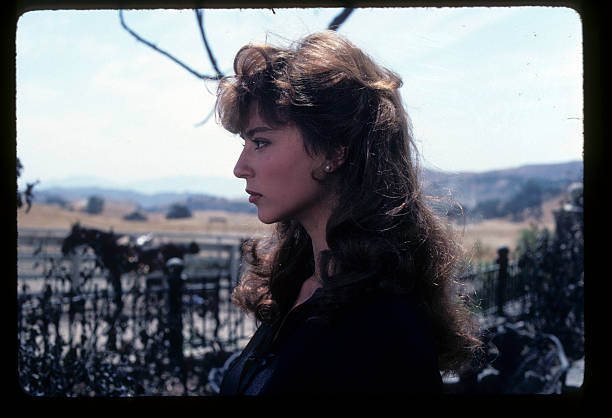
thinking about The Thorn Birds and the original forbidden love story
There is a legend about a bird which sings just once in its life, more sweetly than any other creature on the face of the earth. From the moment it leaves the nest it searches for a thorn tree, and does not rest until it has found one. Then, singing among the savage branches, it impales itself upon the longest, sharpest spine. And, dying, it rises above its own agony to out-carol the lark and the nightingale. One superlative song, existence the price. But the whole world stills to listen, and God in His heaven smiles. For the best is only bought at the cost of great pain…. Or so says the legend.
I keep thinking about what it means to choose something that you know will destroy you. It’s that particular kind of ache in the story of The Thorn Birds, written by Colleen McCullough, that I can’t shake. It’s also why I’ve returned to that story so many times, without any other conclusion except that there must be some sort of inexplicable love that drives that self-destruction. A love that completely enwraps you. And perhaps people will say it makes you blind, but others will claim they’ve never seen so clearly. That’s a paradox that sits with me far too often. I think that’s where our heroine Meggie Cleary spent her whole life: in that impossible space between the two.
the space between wanting and having
Meggie Cleary spends her entire life loving a priest. Ralph de Bricassart – beautiful, ambitious, bound to God and the Church in ways that leave no room for her. She loves him as a girl, when he’s the first person who truly sees her. She loves him as a woman, through a loveless marriage to another man, through the birth of Ralph’s son that she keeps secret from – keeping that piece of him she gets to claim – through decades of waiting for the brief moments when he returns to her.
Meggie’s life is literally built around his absence. Around the idea of him. Around the slim hope of stolen afternoons that she knows, even as they’re happening, will never be enough. It’s the original impossible love story: the priest and the woman who longs for him. The archetype that’s endured for centuries because of the absolute barrier and its intrigue. But what is it about the things we cannot have but choose to keep anyway? What is longing when it stops being something that happens to you and becomes something you choose?
Meggie could have left. She could have moved on. She could have built a life with someone available, someone who could love her fully and openly. And yet she doesn’t. She returns to Ralph, again and again, knowing exactly what she’ll get and what she won’t. What is she doing in a love that will never give her what she needs? There was always something else happening here beyond tragic romance for me. Something that looks almost like defiance.
maybe the wanting is the point
In Meggie’s story, longing is the organizing principle. It’s what she wakes up to and falls asleep with. It’s how she measures time – the years between visits, the moments she gets to keep, the waiting that fills everything else. Her marriage to Luke, the children she raises, even the way she moves through Drogheda – all of it arranged around this central absence, this man who will never fully be hers.
I never thought of it as passive. You know, the woman who waits, who suffers nobly, who lets life happen to her? That wasn’t Meggie. Meggie consciously, repeatedly chose pain. She built her life around what she couldn’t have, not because she was trapped, but because she simply wouldn’t accept anything else. The act of longing itself shifts over time, it accompanies her in different variations throughout the stages of her life because she maintains it.
And here’s what I keep coming back to: Ralph’s vows as a priest aren’t just an obstacle in this story. They’re the whole point. The impossibility is essential. Would Meggie want him if he were available? If he could choose her freely, without his obligations to the Church standing between them, without the weight of his ambition and his God pulling him away? I don’t know. Maybe the longing itself is what she’s chosen. Maybe satisfaction would end something she needs to sustain.
the flame that never dies
Which brings me to what makes this story ache: Colleen McCullough refuses to rescue Meggie. There’s no moment where Ralph has an epiphany and leaves the Church. On my third rewatch of the series, I wasn’t even sure of what he felt towards Meggie anymore. There’s no divine intervention that releases him from his vows. The barrier never falls away. Meggie’s agency – and I do think agency still applies here – is exercised entirely within that deprivation, as she never even tries to escape it.
An ideal love story would complete us, in some way. Great romance promises consummation, fulfillment, the barrier overcome and the lovers finally united. Even tragedies give us the consolation of having loved fully, if briefly. But what about the loves that never come together? The ones that exist entirely in the space of wanting, in the space of almost-but-never? More importantly, why does it bother us so much when a woman chooses that? When she refuses to let go? We want to rescue her. We need her to rescue herself. WE start to long for that; the idea that she might choose this suffering feels wrong and failing at empowerment.
So many of these questions are answered in the secret that the original impossible love story has always kept and understood. The priest, the vows, the God between them – it’s never really been about overcoming the obstacle. It’s been about desire that can’t be satisfied, love that exists only in its own frustration. That’s what makes it powerful, what makes it endure. Because in a somewhat twisted way, it ensures that the thrill, the “flame” we’re so obsessed with, never dies. It’s a longing that’s never meant to be fulfilled. Only sustained.
authoring your own pain
When I spoke of defiance earlier, I thought of a key moment in the story when Meggie tells Ralph the truth about their son years later, making him see what his vows cost, which absolutely destroys him. I get chills when I think of how cold she was in that scene. She didn’t do that because she thinks anything will change, or because she actively wanted to hurt him. I think she just wanted what she wanted and was done pretending otherwise. These aren’t the actions of someone passively suffering. They’re choices, each one made with open eyes.
Yes, it costs her. Yes, it hollows her out in ways that are painful to witness. She builds her life around an absence, raises the son of the man she loves (who also becomes a priest by the way!), watches decades pass in the space between Ralph’s visits. But it’s hers. The longing, the pain, the deliberate return to something that will never satisfy her – she authors all of it. And with all of her defiance, Meggie loves deeply because she doesn’t know how to otherwise. That was what hurt the most. That passionate, deep, all-consuming love that so many of us think is a nuisance. Her life was far from conventional, fair, or even beautiful. She spent it searching for purpose, granted, in the wrong direction, but no one really helped her find another.
The priest and the impossible love – the framework has always understood this. That sometimes the wanting is the point. That satisfaction would end the story, and Meggie doesn’t want the story to end. She wants the longing itself. The act of it. The choice of it. Even when it destroys her.
The legend McCullough started her story with, the one I started this entry with, tells us the bird pays for that perfect song with its life, but it also tells us something else: the bird chooses the thorn. It doesn’t stumble into suffering. It seeks it out.
I still don’t know if Meggie’s story is tragic or transcendent or both. I don’t know if the clarity she finds in her longing is wisdom or delusion, if her choices constitute freedom or a more sophisticated form of cage. But I think that’s what the original impossible love story has always known – that there’s a strange dignity in wanting what you can’t have and refusing to look away, in choosing the thorn and singing your song anyway. With that, I leave you with a quote from Father Ralph – the man who was Meggie’s thorn, and she his:
“Each of us has something within us which won’t be denied, even if it makes us scream aloud to die. We are what we are, that’s all… We can know what we do wrong even before we do it, but self-knowledge can’t affect or change the outcome, can it? Everyone singing his own little song, convinced it’s the most wonderful song the world has ever heard. Don’t you see? We create our own thorns, and never stop to count the cost. All we do is suffer the pain, and tell ourselves it was well worth it.“

 the back rows
Leave a comment