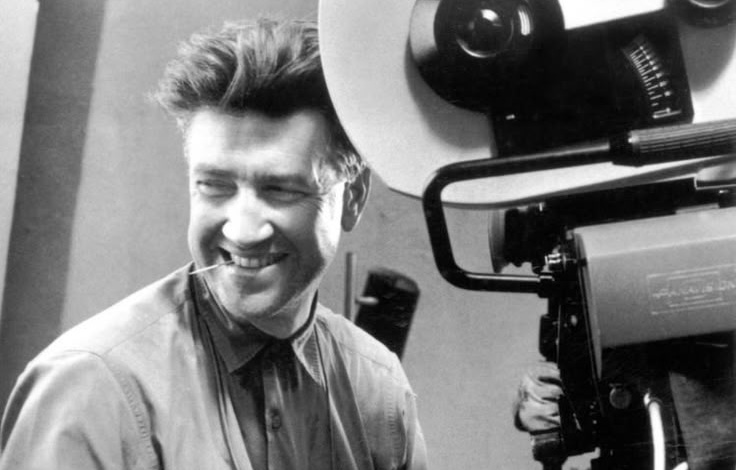
a look at the director’s enduring influence on today’s generation through his cinematic style.
When David Lynch passed away this year, I genuinely felt like part of me was torn between not believing it entirely or letting that one essential piece of my love for cinema go with him. This one especially hits hard because he was one of my favorite directors, artists, writers, and human beings all in one. It’s hard to explain why in just a few words—I just think that no one saw the world quite like he did. He is the only one who has successfully made me afraid of cinema and its power.
David Lynch definitely earned his status as one of the most enigmatic figures in contemporary cinema, having won many awards for works such as Lost Highway (1997), Mulholland Drive (2001), and Twin Peaks (1990–1991). His background in writing and painting also contributes to his unique approach to narratives and imagery, and he often likes to infiltrate his own films with little cameos.
Let me ask you this: Have you ever had a dream so complex you couldn’t possibly imagine how it was formed? An unexplained impulse to do something you wouldn’t normally do? Well, to me, David Lynch has the answers to these questions, and I think that’s a big part of why I love his work.
It’s complex and often subjective to describe the uniqueness and feel of Lynch’s cinematic style—so much so that an actual word, Lynchian, was invented for his specific style. For example, Black Swan (2010) and You Were Never Really Here (2017) are reminiscent of the Lynchian style, if you’re looking for more modern visuals.
Looking away from the screen during a David Lynch film is almost impossible, even when the most unusual things you can imagine are happening. A fellow student in one of the many film classes I took in college said something I really liked: that they were “strangely not repulsed” by what they saw. The closest way to explain this logically would be that there’s a mixed feeling of familiarity and foreignness at the same time that leaves you completely perplexed. Lynch’s films tend to stay with the audience long after they’ve left the theater. Essentially puzzles and mysteries wrapped in a blanket of surrealism, they attempt to provide insight into what the subconscious and dreams are made of.
Lynch asks questions that seemingly cannot be answered and creates images that are hard to visualize. A prime example would be one of my favorite TV shows ever: Twin Peaks (1990), where he uses symbolic motifs and a metaphorical form of storytelling, offering different interpretations for the audience to ponder. (I’m not even going to attempt to talk about this show here because there’s not nearly enough space, but I highly recommend it nonetheless.)
There are things that can’t be found anywhere, but we dream they can be found in other people.
David Lynch in Twin Peaks.
In a David Lynch film, the atmosphere and mood of the visuals are essential, accentuating the non-conventional narratives the director often aims for. Viewers say there is a sense of shared experience within his films because he’s able to project various thoughts and feelings they cannot express. It’s almost as if we find solace in his movies—speaking for us more so than to us. Lynch knows how to tap into universal themes and emotions in a profoundly personal and harsh way. He will actively shock you, impress you, and make you question humanity, identity, desire, and fear.
What I also think is timeless about the director’s work is that he became obsessed with exploring the darker parts of society, blurring the line between mundane and bizarre more and more. Specifically, he’s got a remarkable knack for switching between establishing shots—introducing the setting—and dramatic, action-packed events. One minute, you’re watching Jeffrey and Sandy enjoying a burger in Blue Velvet, and the next, they’re running away from a man on the loose with an oxygen mask.
And here’s the thing: the script and plot aren’t the richest features in Lynch’s films. You’ll find that the stories are driven by cinematography, symbols, and surreal elements. Lynch uses unusual camera angles, slow editing, unexpected settings, and eerie sounds to bring the image of the subconscious to life. He completely pushed the boundaries of visual storytelling, focusing on more cinematic aspects with Eraserhead (1977), his first major feature film. After Eraserhead, these techniques were encouraged over traditional plot development in the film industry, with many filmmakers shifting to a more experimental and atmospheric approach to cinema. Directors such as Darren Aronofsky, Lynne Ramsay, and Xavier Dolan have cited Lynch as a significant inspiration for this particular reason.
Besides his familiar favorites—surrealism and metaphors—Lynch perpetually explores moral ambiguity and the duality of “good” versus “evil” within his characters. He constantly shows the light and dark parts of their personalities, the eternal dilemma between hero and villain. It is fascinating how his characters’ personas bleed into one another, exposing the hypocrisy and moral decay of the allegedly perfect suburban lifestyle. Part of his lasting influence is that his films continue to push audiences to reconsider traditional ideas of morality within the intricate human experience—with the same effect today.
I’ll leave you to check out David Lynch’s works which promise enigmatic storytelling and mind-bending audiovisual journeys for when you’re in the mood for a cinematic adventure that defies conventions and stimulates the imagination.

 the back rows
Leave a comment